
This summer’s studio residents, Robert (Robbie) Bailey and Witt Siasoco, spent their residencies creating conceptual work that - although they rely on different techniques (metal casting and welding, respectively) - both explore a complicated interplay between celebration and grief.
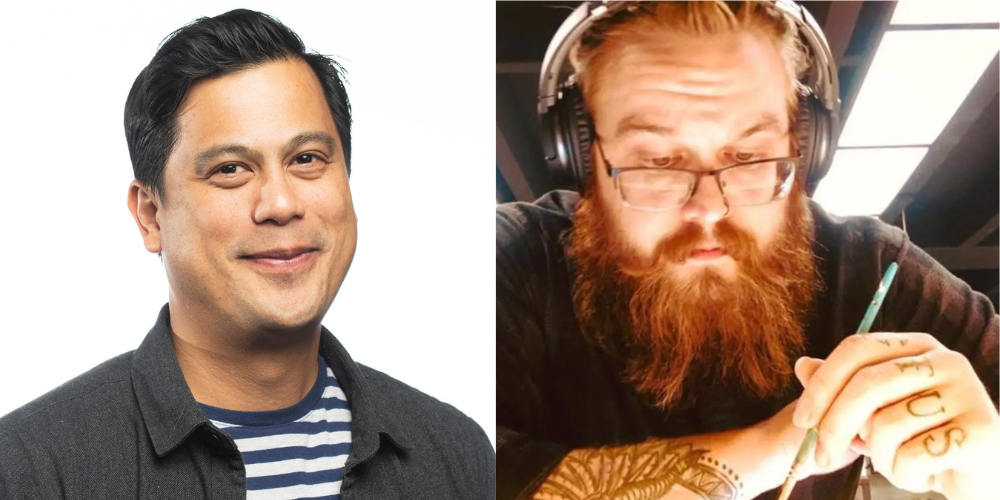
Witt Siasoco (left) and Robert Bailey (right).
Robbie’s culminating exhibition, titled Gasoline Epochs, showing in CAFAC’s gallery through November 20, features dozens of cast aluminum and bronze gas canisters, quart-sized oil containers, and gas pumps in an installation that evokes birth, marriage and death of an essential, inescapable natural resource. It’s a remarkably cohesive body of work, one he’s been developing since he was a graduate student working in sculpture.
“I actually started my artistic career as an undergrad in printmaking,” Robbie says. “I kind of traversed into sculpture because I had experience with welding and fabricating, working on hot rods, in my teenage years.” Growing up in Wichita, Kansas, Robbie was immersed in its car culture and found joy in transforming metal and repairing deteriorating machines. He doesn’t work on cars much these days, but that influence has stuck around in the aesthetics he works with - rusty objects, enamel paint, and oil and gas containers. Robbie’s exhibit visualizes a complicated relationship with gasoline in a memorial of sorts, expanding on his graduate thesis project: An outdoor installation called the Gasoline Mausoleum.
“I was preemptively celebrating the death of gasoline,” he explains. “Not celebrating in a joyous way, but in a traditional mausoleum where you’re honoring the subject, but also recognizing, you know, that it’s dead. Or dying, even though it's not dead currently."
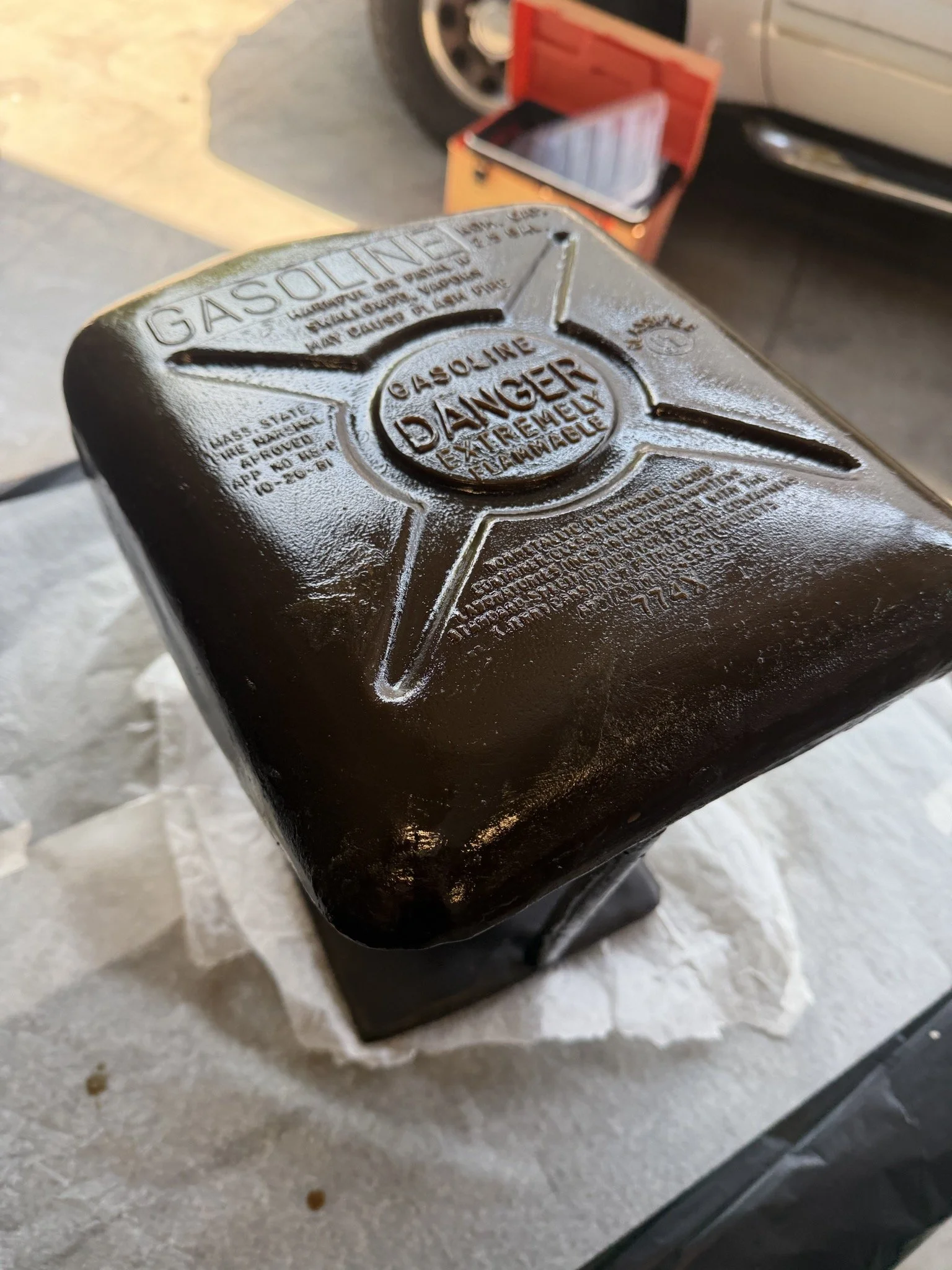
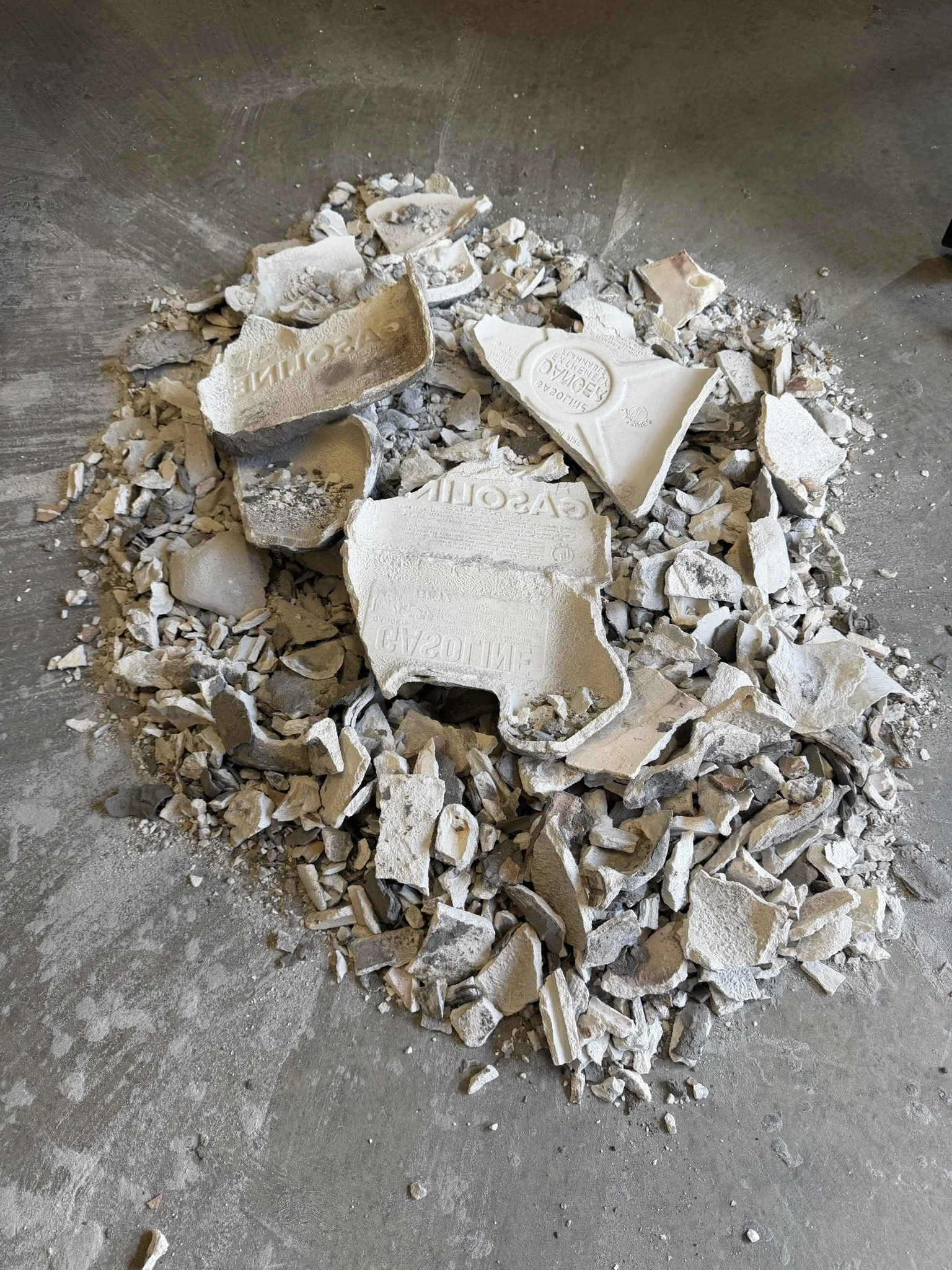
Left: A wax model of a gas can, ready for coating with ceramic shell molding material. Right: A pile of broken ceramic shell pieces, removed after molds were cast.
"I'm trying not to be a hardliner where I hate gasoline because of what it's done to the environment," he says. Although he recognizes that truth, he also wrestles with the positive impact that gasoline and cars have had on his life. Getting his own car as a teenager meant freedom and made some of the best moments of his life possible.
"One thing I've been thinking about a lot is when you have a pet that gets old and rabid and starts biting everybody," Robbie says, "You don't just hate it and kill it and be done with it. You still love the animal and you put it down, but you put it down respectfully. You remember what it was during the good times and not the bad times." Gasoline Epochs is an attempt to reconcile the positive developments that have been possible because of gasoline - both for him as an individual and for society - as well as the harm it's caused to the natural environment, to human health, and the conflicts it's responsible for.
"I'm personifying the gasoline," says Robbie, "putting them in human situations. It's about inviting the viewer to kind of see themselves as gasoline, and try to develop maybe empathy, maybe awareness of how complicated that relationship can be."
For Robbie, the CAFAC residency has been a chance to start creating his own work again. "I had done some teaching, but as far as creating things for myself, it'd been a couple of years." He's spent dozens of hours every week in the foundry shed, welding shop, and grinding booth. "I was really thirsty for it," he says. "I wanted to do this big installation and four months probably isn't really enough time, but I'm rushing it and doing it. The facilities have been kind to me and helped me think about how I could build my own home practice someday."
Besides allowing him to create his own work, Robbie has also appreciated being able to share space with other artists and fabricators - especially the public art team.
"I think that's the thing that's impressed me the most here," he says. "While I'm here, they've been working on two major projects. Some of my late nights have been working with them in the same building," he says. Seeing them create large projects so quickly has been both impressive and motivational for him - and having other folks to create beside during late nights offers a sense of camaraderie.
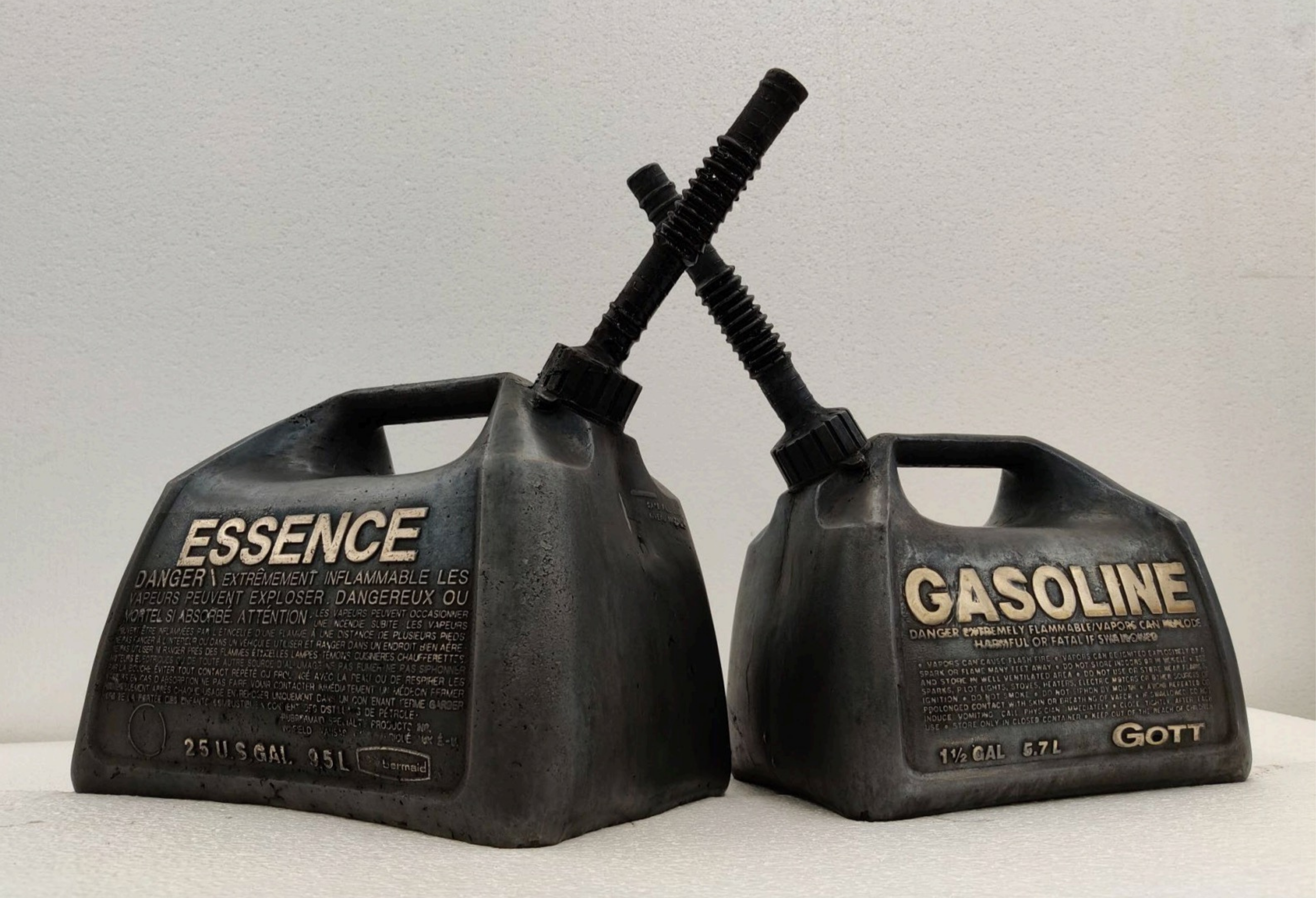
Two finished pieces featured in Gasoline Epochs, cast in bronze with a dark patina.
Witt's project, like Robbie's, plays with the concept of memorial as well. His art career started with more two-dimensional visual projects, but over the past few years he's expanded more into sculptural pieces meant for public installation.
"I love museums, but they're inaccessible to some people," he explains. Witt has made a point of helping create more work in places where people congregate: bus stops, vacant lots, and other neighborhood spots that aren't traditionally considered a home for artwork. "Work in public, everyone can interact with it. It's a different type of work," one he's spent the past few years focusing on.
One notable piece Witt worked on lives in Rhinelander, Wisconsin, and was created collectively through a community engagement process - something Witt prioritizes in his work. After a youth from Rhinelander was lost to suicide, there was a push by young people to create a community space to honor his memory and bring together the community. Witt led writing and letterpress workshops, aiming to bring residents together into communal experience of processing this loss. The final piece takes the form of a sculptural sound bench with an audio element - recordings of youth speaking to someone they've lost connection with - that works through bone conduction. Only by sitting on the bench can you experience those messages.
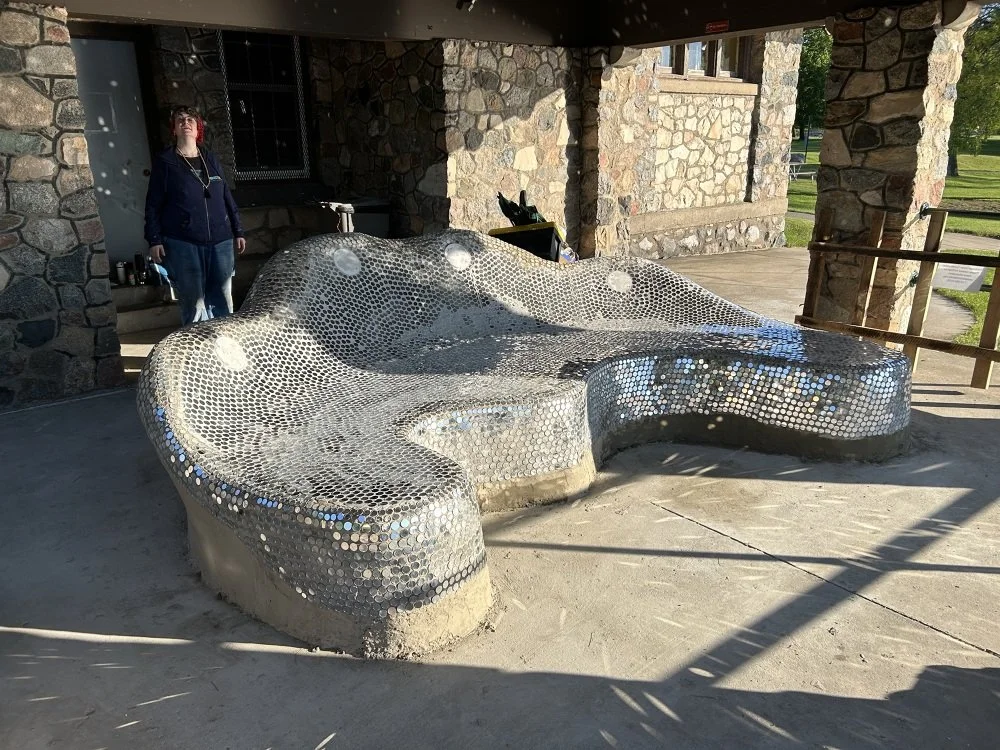
Witt’s sculptural sound bench, titled Together, installed in Rhinelander Wisconsin. From wittsiasoco.com.
Witt's residency project similarly aims to create space for community reflection and processing, this time in Minneapolis focused on the events of 2020 that followed George Floyd's murder.
"I found myself in front of the third precinct staring at a very complex image that resulted in the building burning down. It was a powerful, traumatic, and emotional moment that I think we all experienced as people that live in Minneapolis, and I don't really feel like it's ever been resolved," Witt says. He intends to create an opportunity for neighbors to collectively process that past, and consider what the city's future might look like following those events.
"I've been thinking a lot about memorials and vigils, being here at George Floyd Square, being close to Renee Good's memorial site and also Alex Pretti's memorial site," says Witt. "We as artists might not have all the answers. But making artwork is part of therapy, it's a part of pushing, it's a part of protest, it's a part of healing."
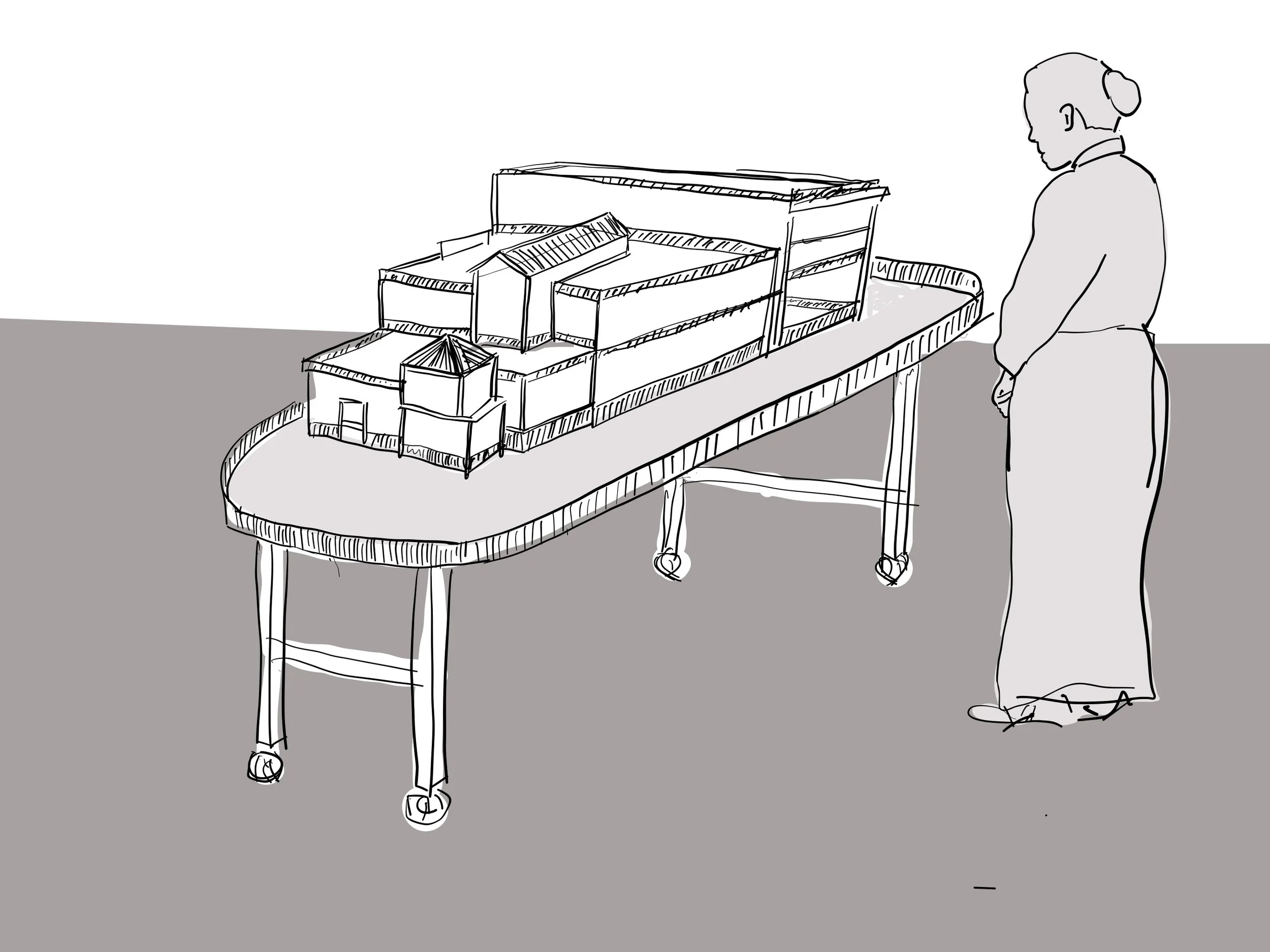
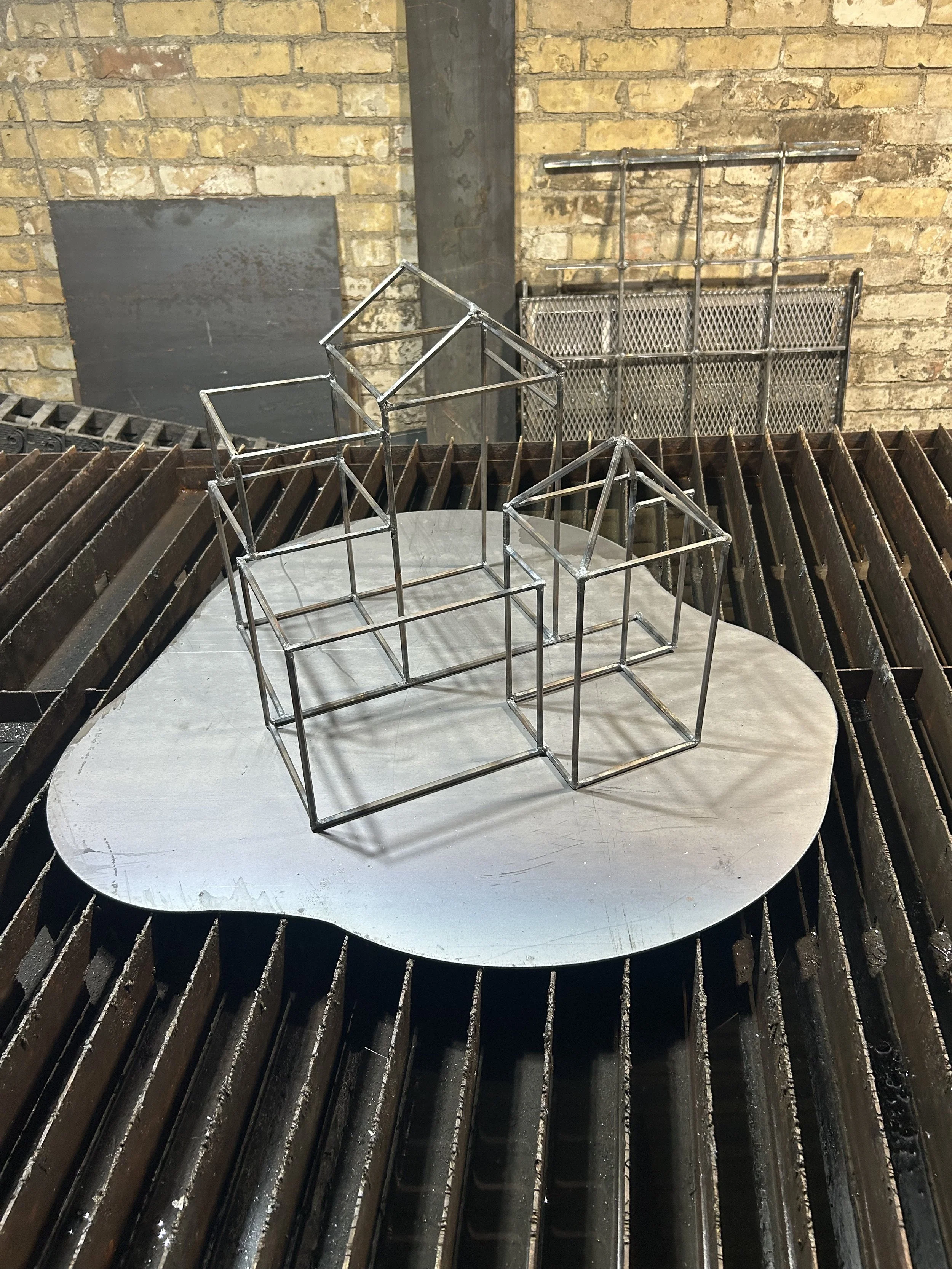
Left: A concept sketch of Witt’s memorial table. Right: A work-in-progress, featuring a welded frame of the third precinct structure and part of the base that will feature in the final piece.
Witt's project takes the form of a mobile vigil table featuring a silhouette of the third precinct in the center. "It comes from that night [that the precinct burned]. I have deep empathy with the folks that are celebrating this burning building and it was just so powerful. I basically biked home in tears, just because it was so complex to think about everybody's perspectives at that moment. To a lot of people [burning the building] seemed like the just thing to do - the tension needed to be released - but it's also super complex and we still sit with it six years after the fact."
The sculpture itself invites viewers to engage by lighting candles and placing them on platforms surrounding the precinct at the center.
"When you light a candle and put it underneath this thing, are you burning it? Are you memorializing it?" Witt asks. "I love that it shows the complexity of what Minneapolis is. We're coming up with a new thing, so it isn't always right or wrong," he continues. "This is how we interact as a community. We have discussions on what safety looks like, or what comfort is, or what revolution looks like. All these perspectives are valid, but we have to hear one another and not go hard in the paint all the time." Witt wants this artwork, among others he creates, to serve as jumping off points for conversation, rather than pushing one specific perspective or pretending to have all the answers.
"Art that has all the answers is fucking propaganda, you know?” he says. “I think that some of the most powerful works of art are ones that you can come up to at different places in your life, and look at it very differently."