

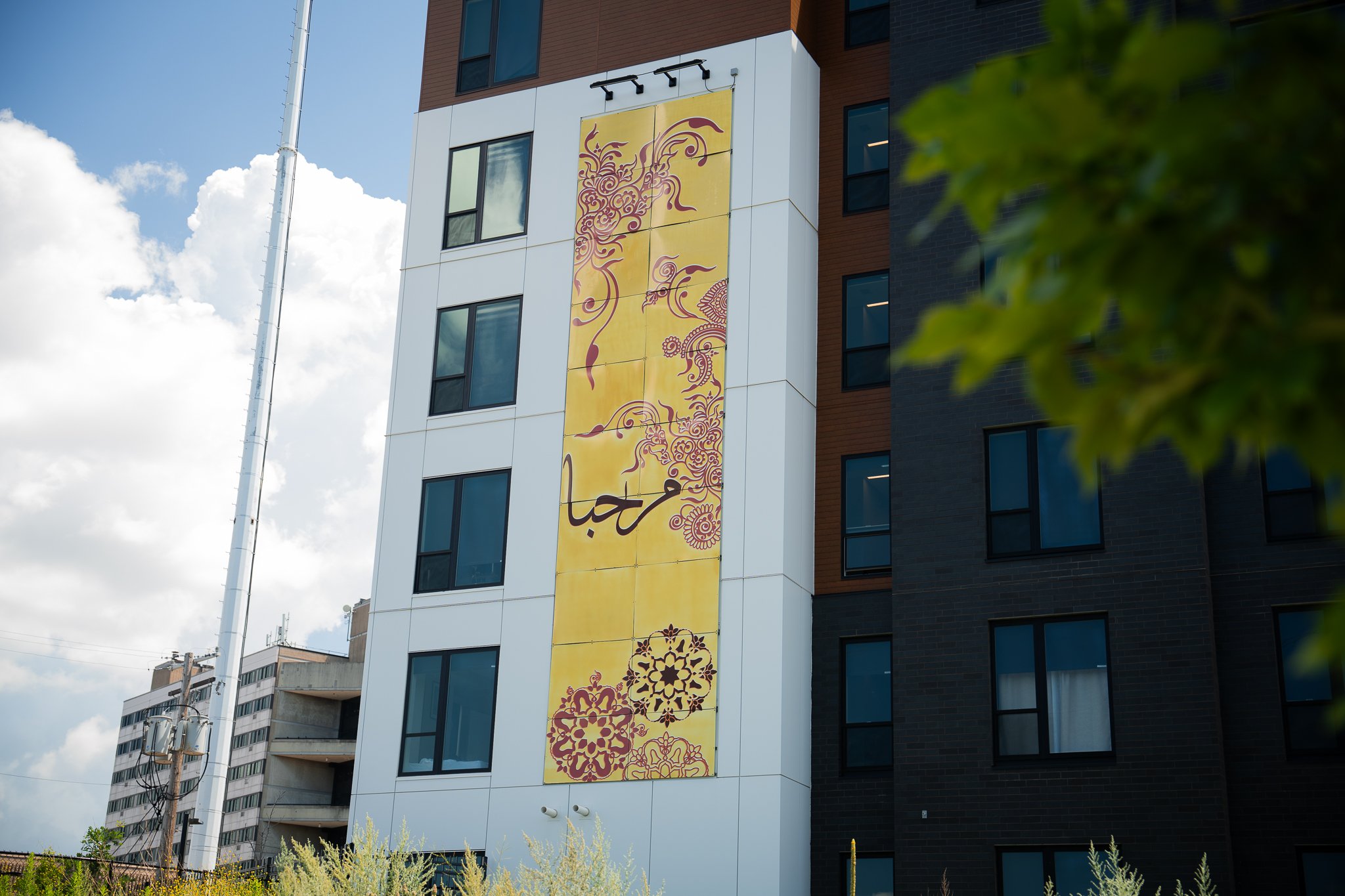
Islamic Inspiration and Somali Sculpture at Wadaag Commons
Starting in the fall of 2025, CAFAC bustled with activity all centered on the Wadaag Commons project: a series of public artworks created for an affordable housing development in Minneapolis’s Seward neighborhood managed by Redesign Inc., the Office of Cultural Work and Noor Companies. The project sought to marry affordable housing with beautiful, culturally-relevant art created by East African and SWANA artists in and around the building. CAFAC had the honor of working with three talented artists - Hend Al-Mansour, Hibaaq Ibrahim, and Yasmin Yassin - to help design and fabricate several outdoor sculptures at Wadaag Commons.
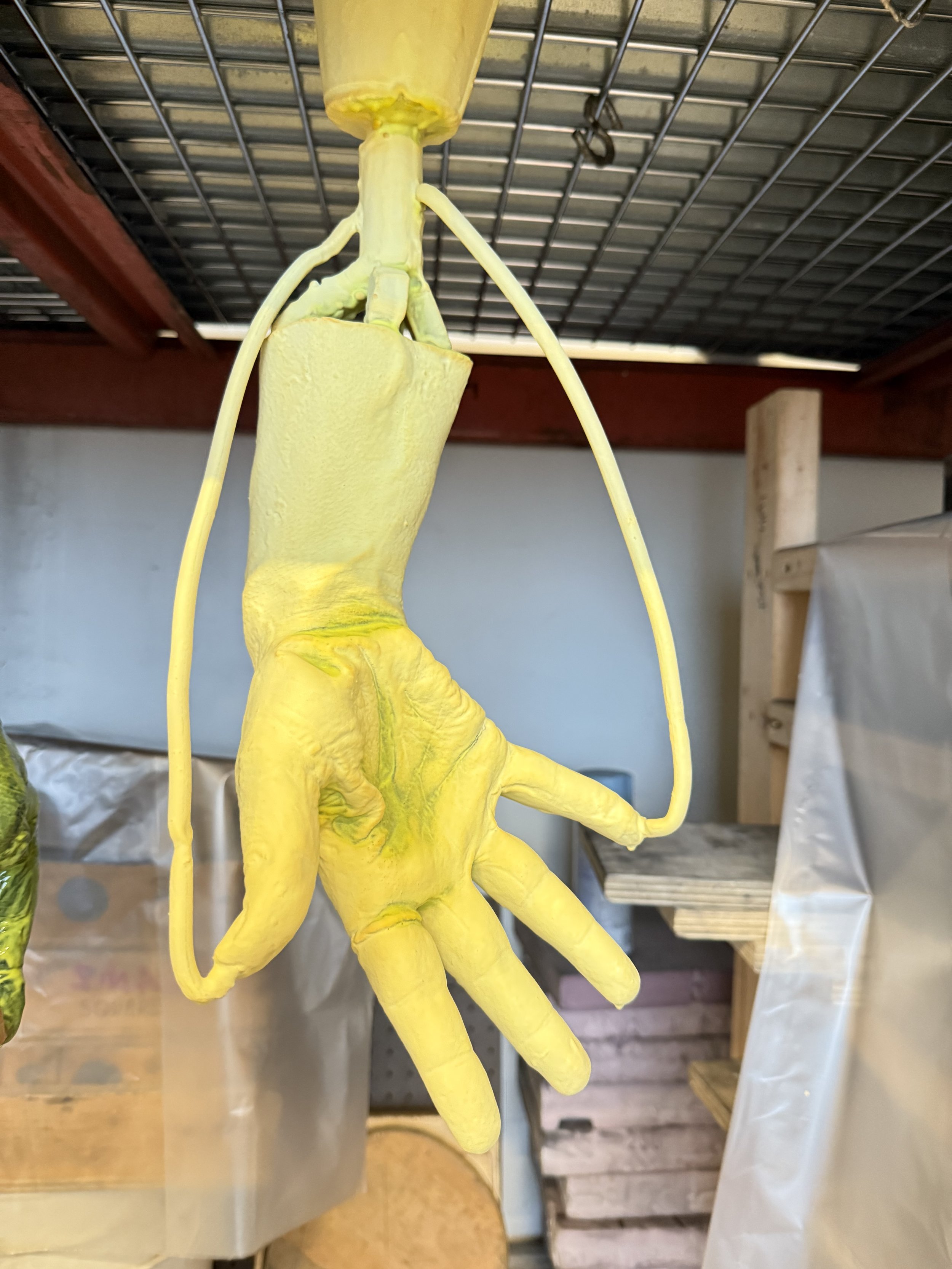
Methods Old and New: Reflecting With Studio Residents Dahn Gim and Lila Westreich
Starting in July 2024, Dahn Gim and Lila Westreich joined us at CAFAC for the fourth round of Studio Residency. Working in glass and cast metal, respectively, the two explored grief, belonging, femininity, and more as they experimented with new and familiar techniques. Read on to hear about Dahn and Lila’s projects and their experiences as studio residents!

Emma Wood Fuses Botany with Kiln-Formed Glass
Citizen scientist and glass artist Emma Wood first became involved with CAFAC in the winter of 2024 as one of two studio residents. Their residency experience culminated in a shared exhibit with fellow flameworker Emily McBride, which contrasted Emma’s realistic depictions of mushrooms with Emily’s geometric grids and prisms.
This summer, they taught a kiln-formed glass workshop that again drew on nature in “Forage and Fuse,” where students brought their own plant material to use in small glass dishes and suncatchers, which preserve the flowers, leaves, and roots permanently.

Building Community through Creativity with Sayge Carroll
Sayge Carroll wears a lot of hats: They’re well known in the Minneapolis arts scene as a co-founder of Mudluk Pottery, a prolific visual and public artist, and a committed community organizer. The newest project to have their name attached to it went up late this winter in Seward, just south of Downtown Minneapolis.
A series of tree grates, decorative panels, and sidewalk stamps were created to accompany a new residential building, known as Rivkin. The project’s original plan included a focus on alternative gardening practices and small-scale urban farming, which appears in Sayge’s designs as stylized leaves and nature-inspired patterns.

The Eternal Flame Story: A Century of Community Transformation
Calvary Lutheran Church has been a hub in South Minneapolis for decades. But when financial circumstances meant change, the congregation and communities connected to the building worked closely with Trellis Development to renovate the building with affordable housing, an expanded food shelf, and a beautiful public art piece honoring the building’s history.
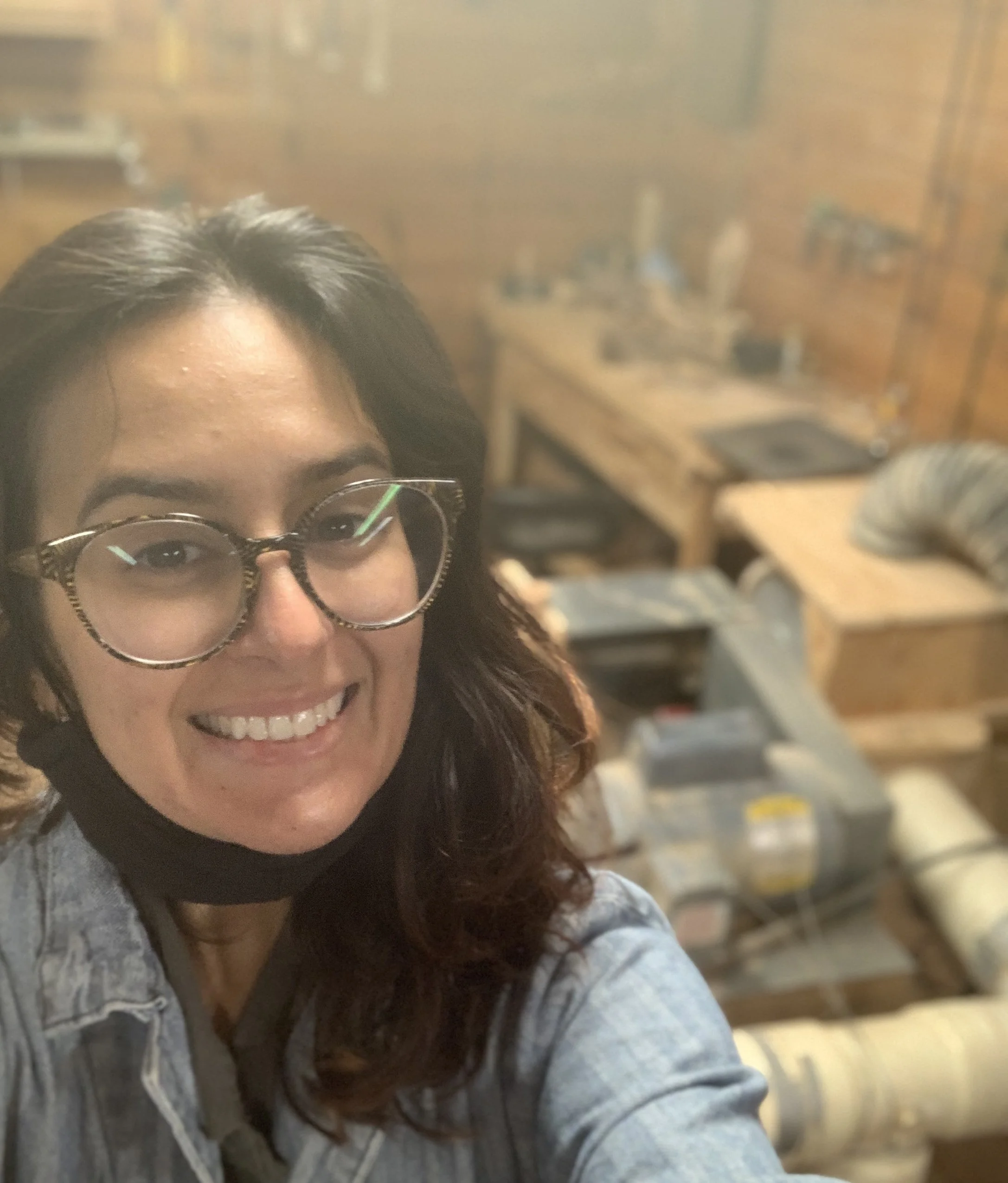
Summer Resident Spotlight: Dani Sanchez
Summer Studio Resident Dani Sanchez has lived countless lives. Over the past few years she’s traveled the country working as a wilderness first responder, wood carver, and most recently, an industrial arts teaching assistant. Her introduction to crafts and making came in Northern Montana–what started as a short stop during a road trip became an extended stay, where she was first introduced to spoon carving and helped set up a small spoon shop near a hostel.

Summer Resident Spotlight: CRICE
If you’re in the Twin Cities, there’s a chance you’ve come across CRICE’s murals or digital work in the past few years. A public-sphere mixed media artist, CRICE is one of our two Spring 2024 Studio Residents, and has been embracing the discomfort of being a beginner since he came into CAFAC this Spring.
“I’m fully a fish out of water with this,” CRICE laughs, “But it's exciting because I really like when my artistry is challenged in a way. It can lead to ‘happy accidents.’”
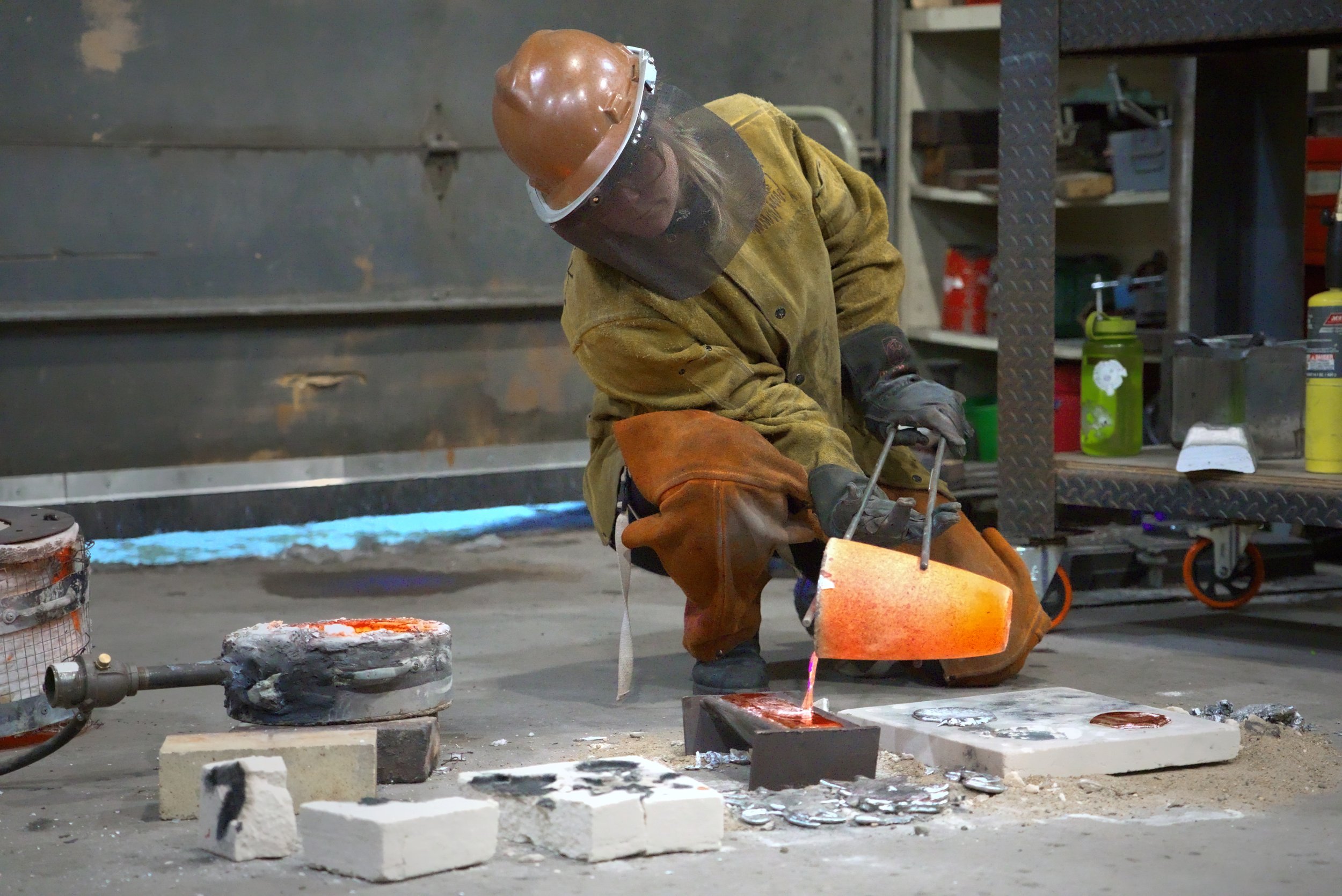
Playing in the Sand with Brighton McCormick
Despite making a living as an artist specializing in foundry–-the practice of melting metal and shaping it with molds—Brighton makes an effort to not take her art too seriously.
“I make fun of art constantly,” they say, laughing. “It is like my whole world, but it’s also like, it’s art. If it’s not fun, why are you doing it?”
That’s the perspective she tries to share with students in her introductory class at CAFAC, Creative Metal Casting: Mold-Making Fundamentals.

A Q+A With Fall Artists-in-Residence, Emily McBride and Emma Wood
From Fall 2023 to Winter 2024, Emily McBride and Emma Wood worked tirelessly to develop their artistic practice and produce work for their culminating exhibit, “re-ti-cu-la-tion: Studies of Familiar and Unfamiliar Networks.” The two found an unexpected similarity between their projects, which used very different approaches to working with glass. Emma’s work drew on mycorrhizal networks and their fruiting bodies, mushrooms, while Emily took a more literal approach to “networks” with a series of structures built from thin glass rods.
Read on to hear the artists speak about their work, inspirations, and post-residency plans!

From Paper to Steel: Vera Wong Fuses Science and Art at Cedar Creek
As a science illustrator, Vera Ming Wong exists at the intersection of art and science. She’s published quite a bit of work in books and magazines focused on ecology, biological diversity, and conservation. On top of that, she’s become known for her unique work with cut paper pieces, which depict environments, organisms, and even relationships between species in a single continuous piece of paper.
It’s this approach to illustration that earned the attention of Caitlin Potter and David Tilman, the Associate Director and Director respectively at Cedar Creek Ecosystem Science Reserve (CCESR). Cedar Creek staff had developed what they call an “ecology walk” in the reserve, where visitors and tour groups could pass through three different biomes in a small area.
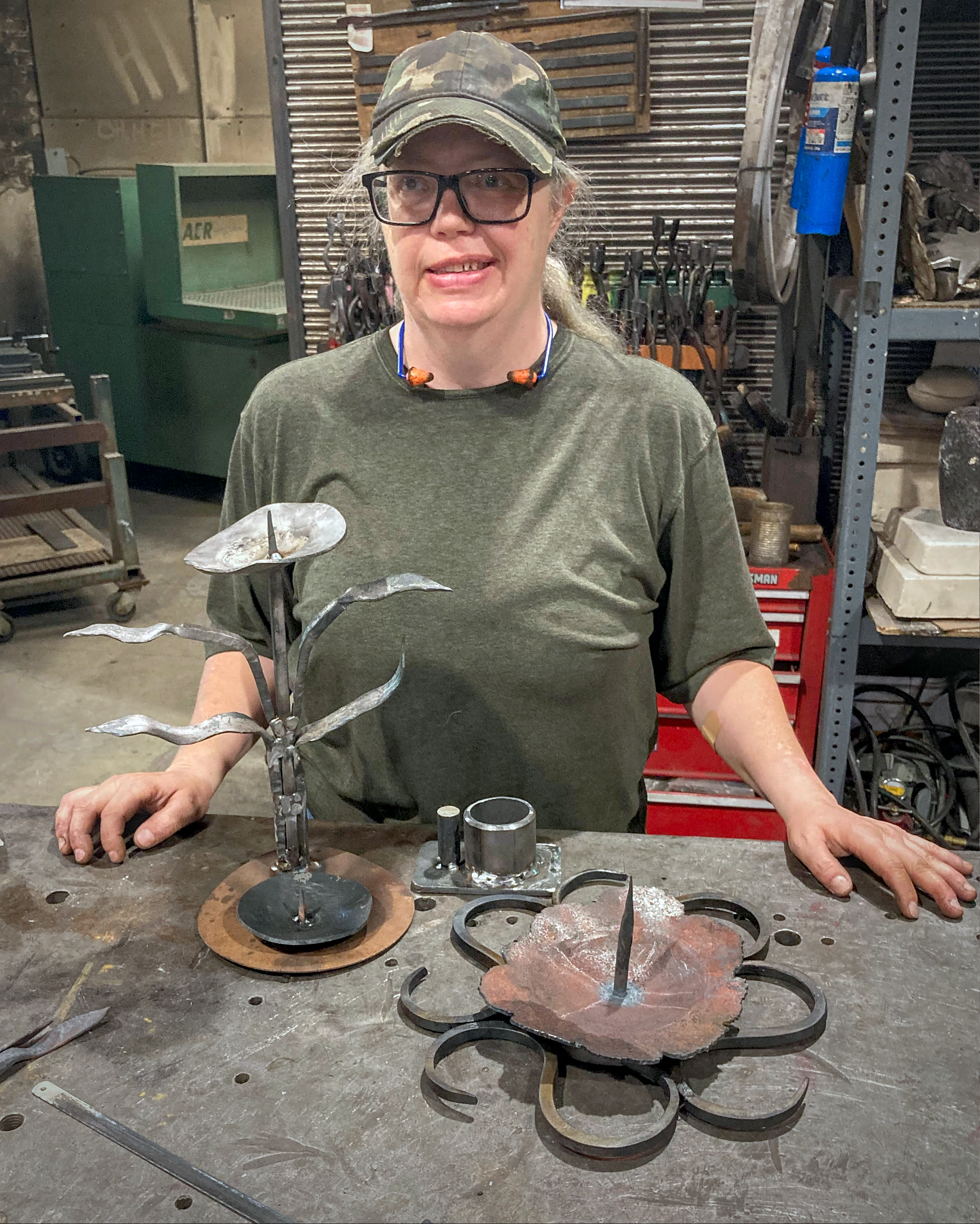
Lori Beck: A Therapeutic Approach to Blacksmithing
Every July, Lori Beck embarks on an annual pilgrimage to CAFAC from her home in Michigan. Each year, she’s greeted with a private forge, and plentiful iron stock, and uninterrupted, one-on-one access to blacksmithing instructor Brad Buxton’s guidance.
Lori is one of hundreds of students who take classes at CAFAC to refine their skills in the fire arts, including welding, stained glass, metal casting, neon, enamel, and–her medium of choice–blacksmithing. Her passion for the art form started as a child, when she used to watch her grandfather forging at home and looked forward to visiting historic villages specifically for the blacksmiths.
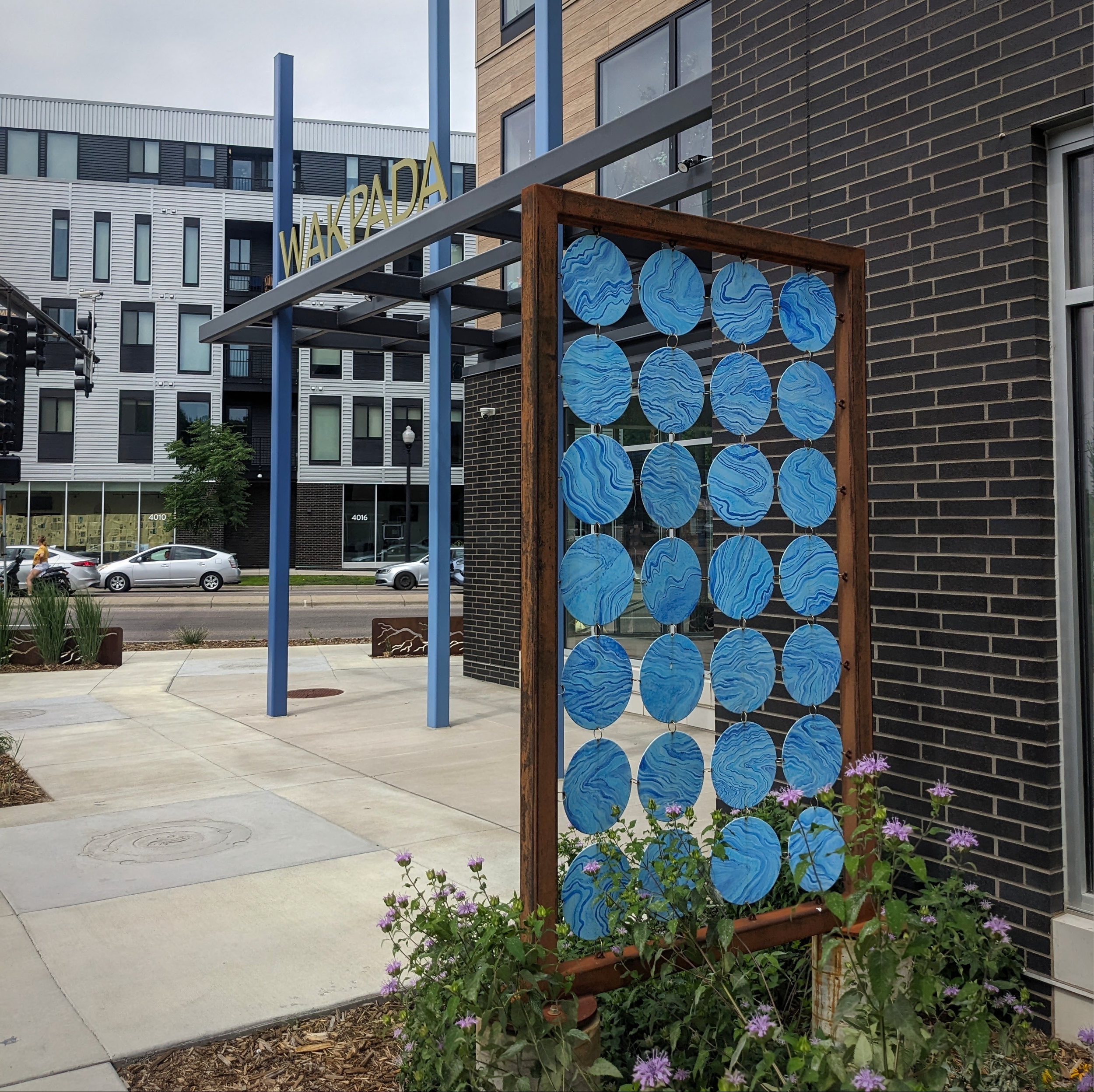
Angela Two Stars Lets Life Flow at Wakpada Apartments
For local Dakota artist Angela Two Stars, finishing the installation of Okciyapi was a huge step in her career as a public artist. But finishing such a large project left her feeling aimless.
“It was a whole process itself–a journey, a celebration,” says Angela. “And afterwards it was kind of like, ‘And then what am I gonna do?’”
Jeff Hall of Hall-Sweeney Properties offered an answer to that question when he reached out to Angela about designing a artwork for their new apartment building, located in Minneapolis’s Hiawatha neighborhood. The building’s name –Wakpada, meaning “creek” in the Dakota language – and Hall-Sweeney’s approach to the project intrigued her.

"Spirit of Hope" Lands on Lake Street: Behind the scenes of CAFAC’s first 3D enamel sculpture
When CAFAC Artistic Director Heather Doyle was contacted by Lake Street Council with an offer to design a piece of public art, she saw it as an opportunity to try something brand new.
"I had been wanting to really push the limits of our kiln into 3D territory in enamel," Heather says. "I said 'I don't know how to do it yet, but please just give me a shot.'"
The response?
"'Well, if it's a complete failure, you'll make us something else cool?'" Heather laughs, "And I was like yes! Yes I will!"
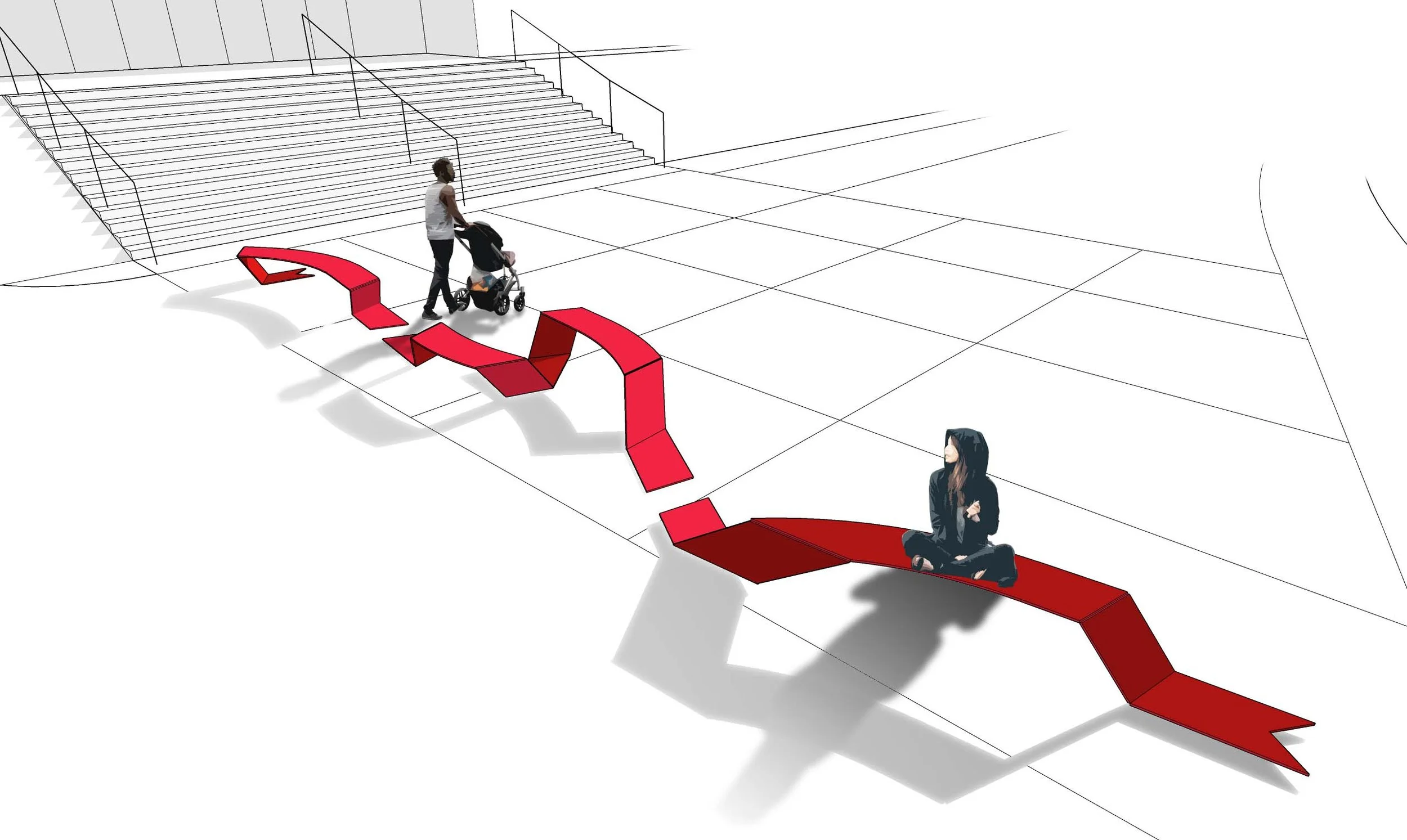
JXTA Artists Design New Public Art for the Guthrie Theater
Our friends at Juxtaposition Arts (JXTA) were recently commissioned to create an outdoor public art piece for the Guthrie Theatre, and CAFAC was fortunate to be asked to fabricate their beautiful design.
For those who aren’t already familiar with JXTA, their innovative JXTALabs hire teens, primarily from the Northside, to apprentice on projects for paying clients such as the Guthrie and many other local businesses and organizations. Currently, young people ages 14-21 can apprentice in six different JXTA Labs: Graphic Design, Ceramics, Public Art and Murals, Textiles and Screen Printing, Tactical Urbanism (which includes community engagement and urban planning) and Environmental Design (focusing on architecture and public spaces).
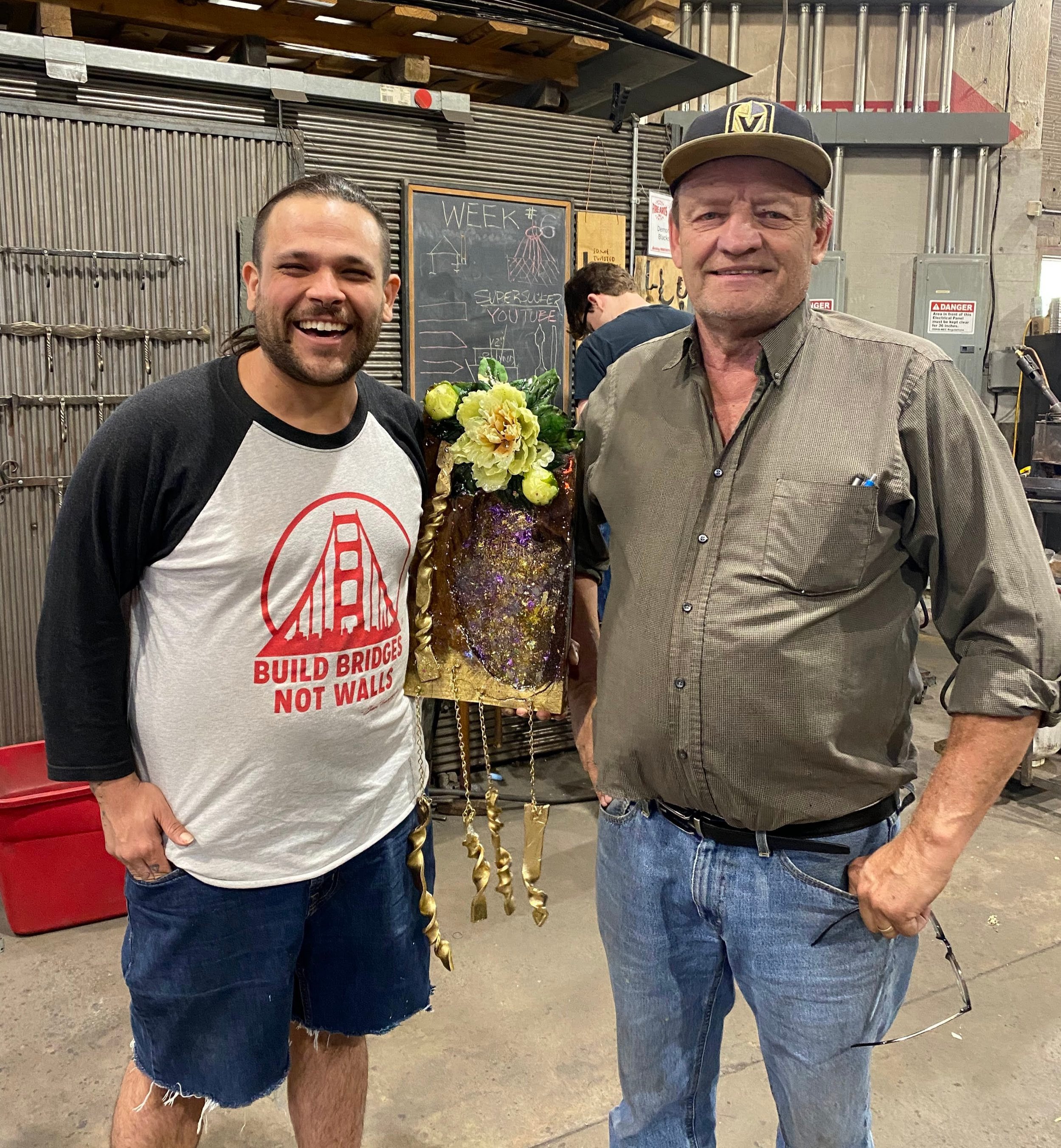
Artist Interview: Mikha Dominguez
Using techniques drawn from self-portrait, collage, make-up, performance art, photography and sculptures, Mikha Dominguez explores themes of gender, the body, religion and the reinterpretation of reality. Their most recent work combines wood, resin, plastic, metals, and bold colors, where ribbons of metal appear to blow on the wind, and flowers remain still and frozen, glistening. Mikha is a recent recipient of CAFAC's full-tuition Blacksmithing scholarship, made possible by the Society for Inclusive Blacksmiths.
Edited from a conversation with us, they agreed to share the story of how they fell in love with metalwork
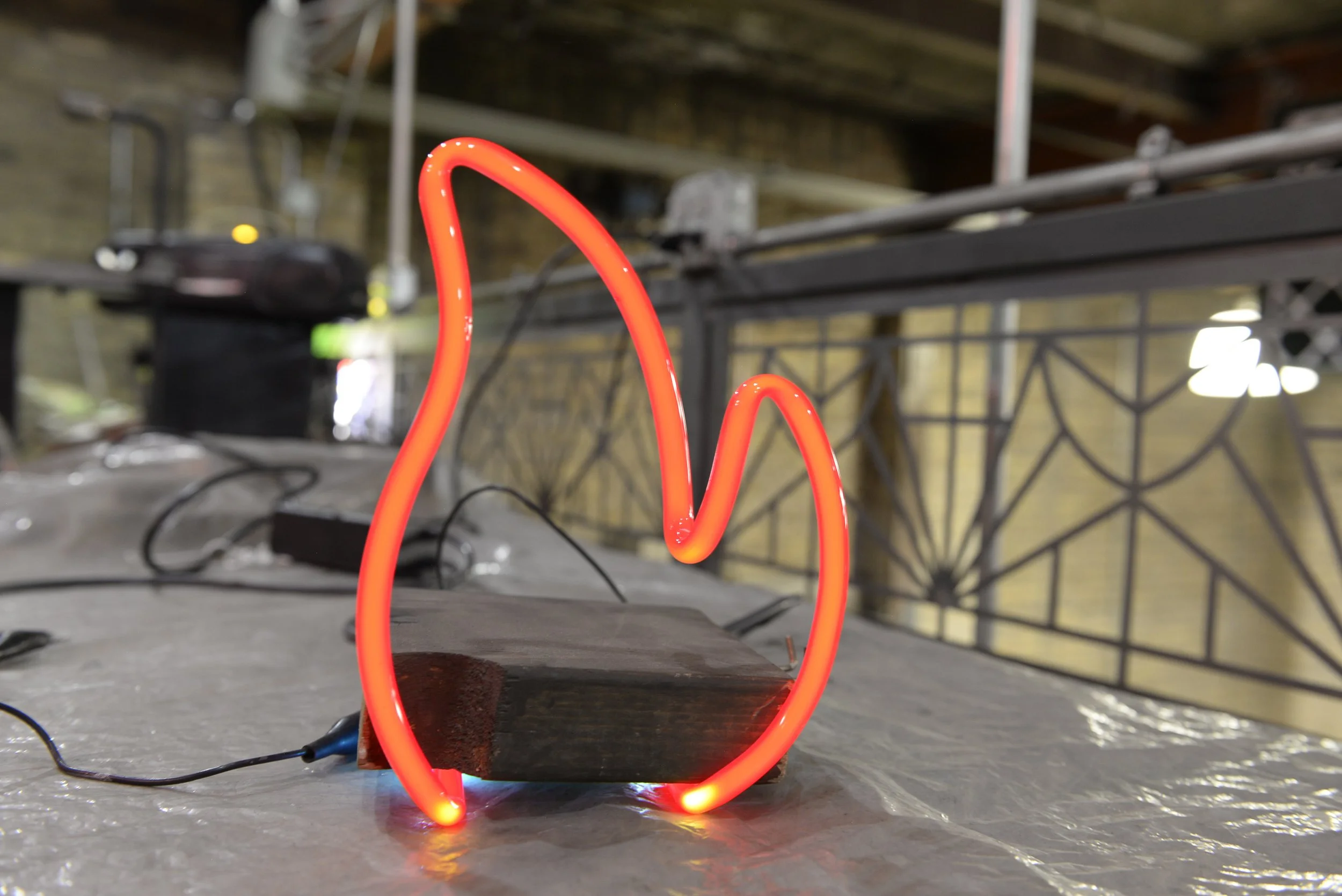
Artist Interview: Jon Ault, neon artist and instructor
The vibrant glow of neon light has graced storefronts and streetscapes for generations. Though less used commercially these days, neon still has an aura that draws artists. We sat down to talk to CAFAC instructor and neon artist, Jon Ault, about his decades bending neon light.
Jon started his neon journey as an MCAD student in the 1970s. They had a neon shop and an “old timer” who’d worked in neon since the ‘50s but not a formal program. Jon says all he had to do was ask to give it a try, and that’s how he started his informal education and lifelong career in neon bending. MCAD eventually taught classes in neon and as neon’s popularity surged in the 1980s, the American School of Neon also offered classes in the Minneapolis Warehouse District.
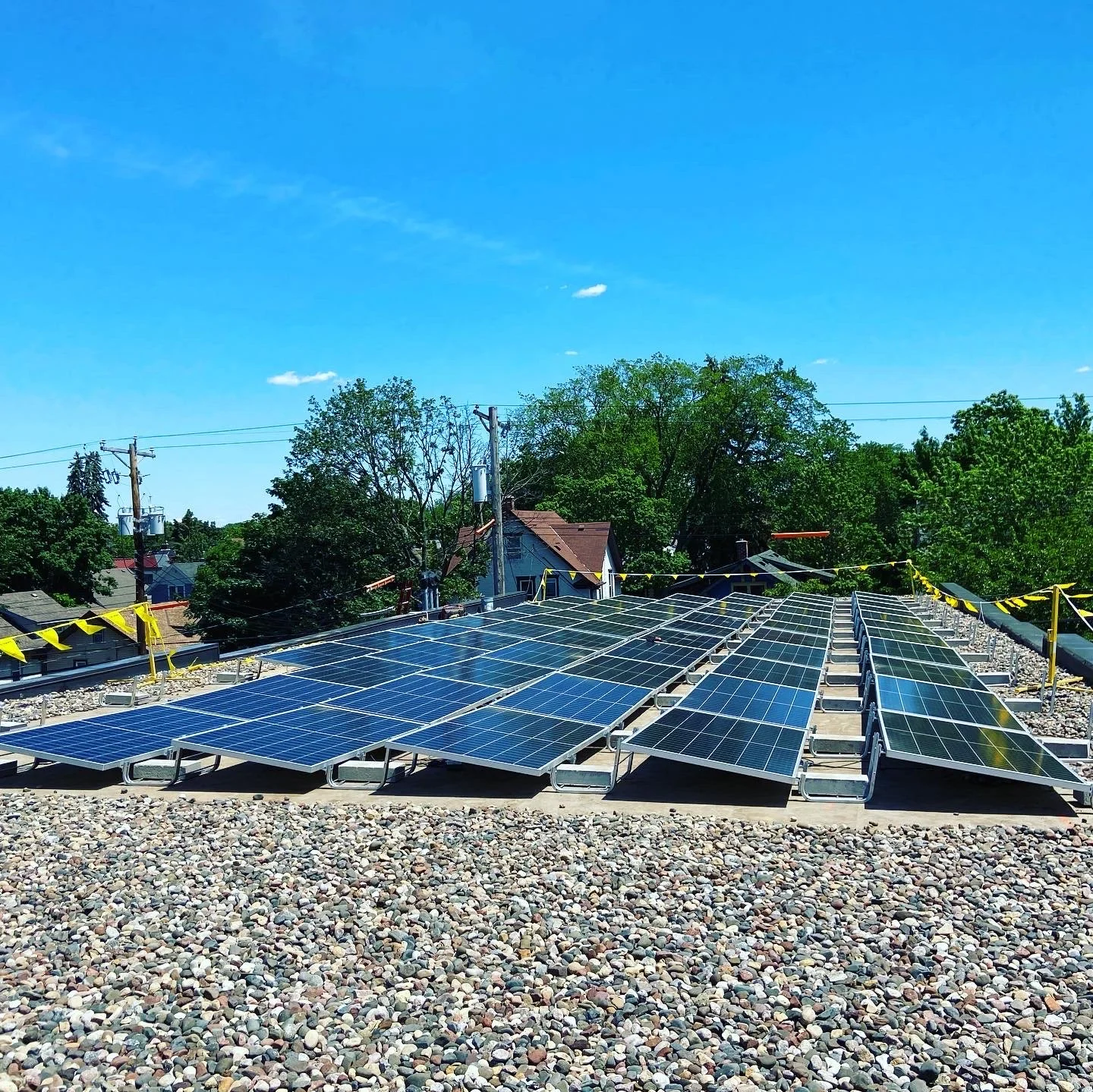
CAFAC’s Commitment to Environmental Stewardship
“We take responsibility for the finite resources used in fire art forms by promoting creative reuse, repair, and environmental stewardship.” This is one of the foundational values that we at CAFAC work to embody on daily basis. Recently we have been working on some larger-scale projects on our own site to offset our organization’s environmental impact, including the installation of a new solar array on our roof and the design of a stormwater management system, to be installed next year.
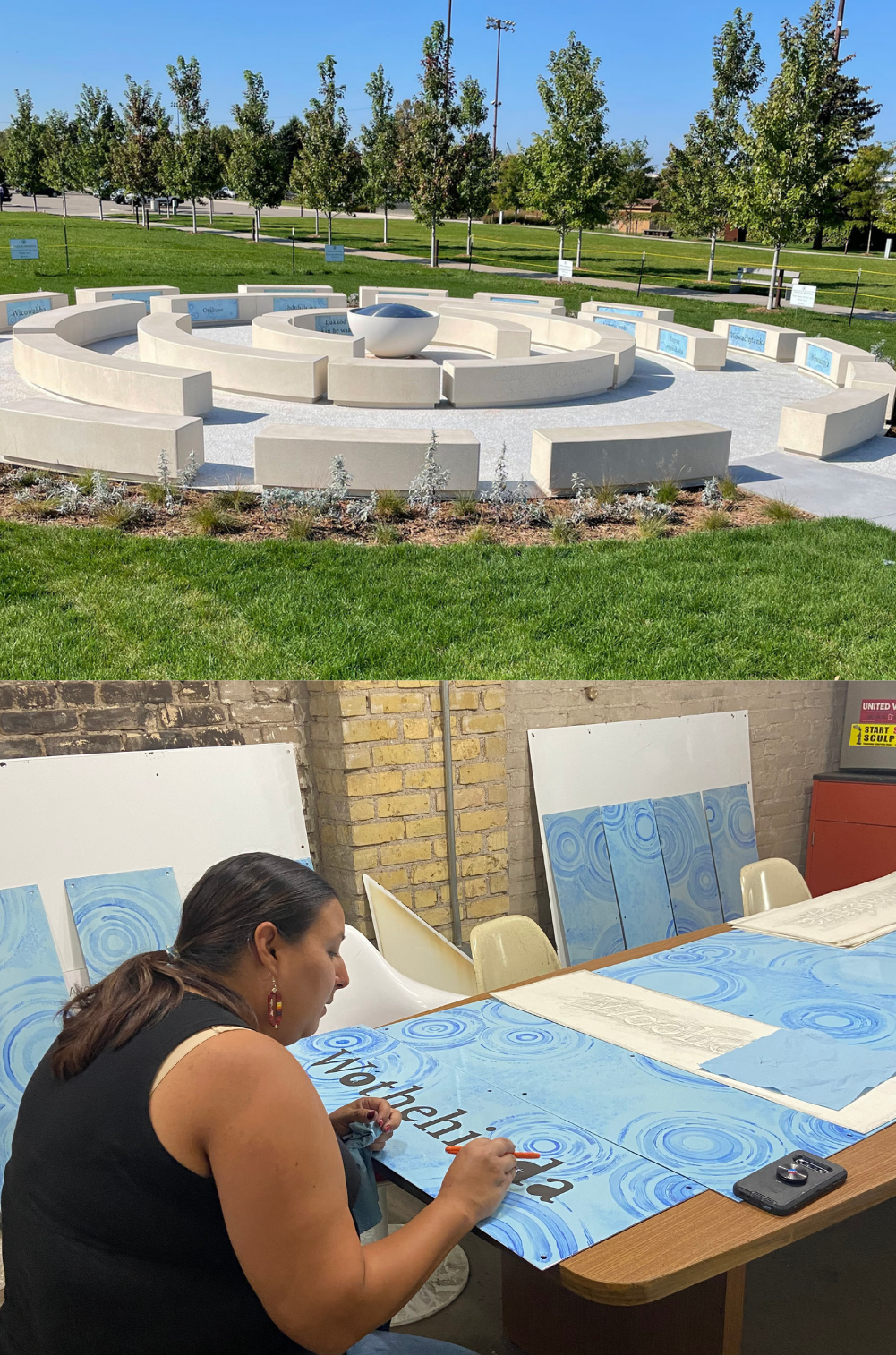
Artist Interview: Angela Two Stars
Angela Two Stars is a public artist, enrolled member of the Sisseton Wahpeton Oyate and the Director of All My Relations Arts. Her latest public art piece, Okciyapi, was installed at the Walker Art Center in the Minneapolis Sculpture Garden in October 2021.
“Okciyapi” (which translates to “Help Each Other”) is the advice Angela Two Stars’ late grandfather, Orsen Bernard, offered to Dakota language learners. That message of language revitalization, and of healing, resonates throughout much of Angela’s work.
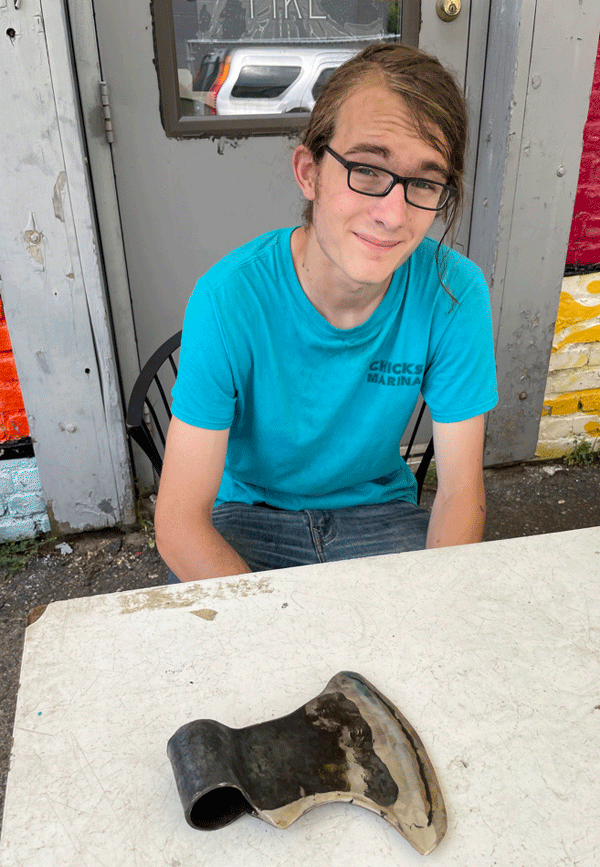
Artist Interview: Quentin Egginton
We are excited to highlight the work of another CAFAC student and artist, 15-year old Quentin Egginton. This fall he’s taking his 12th class at CAFAC, having started back in 2015 with a summer camp sampler class. He says, “We somehow stumbled across CAFAC’s website, and figured it would be something cool to do. So I took the sampler and learned that I really like metalworking.”
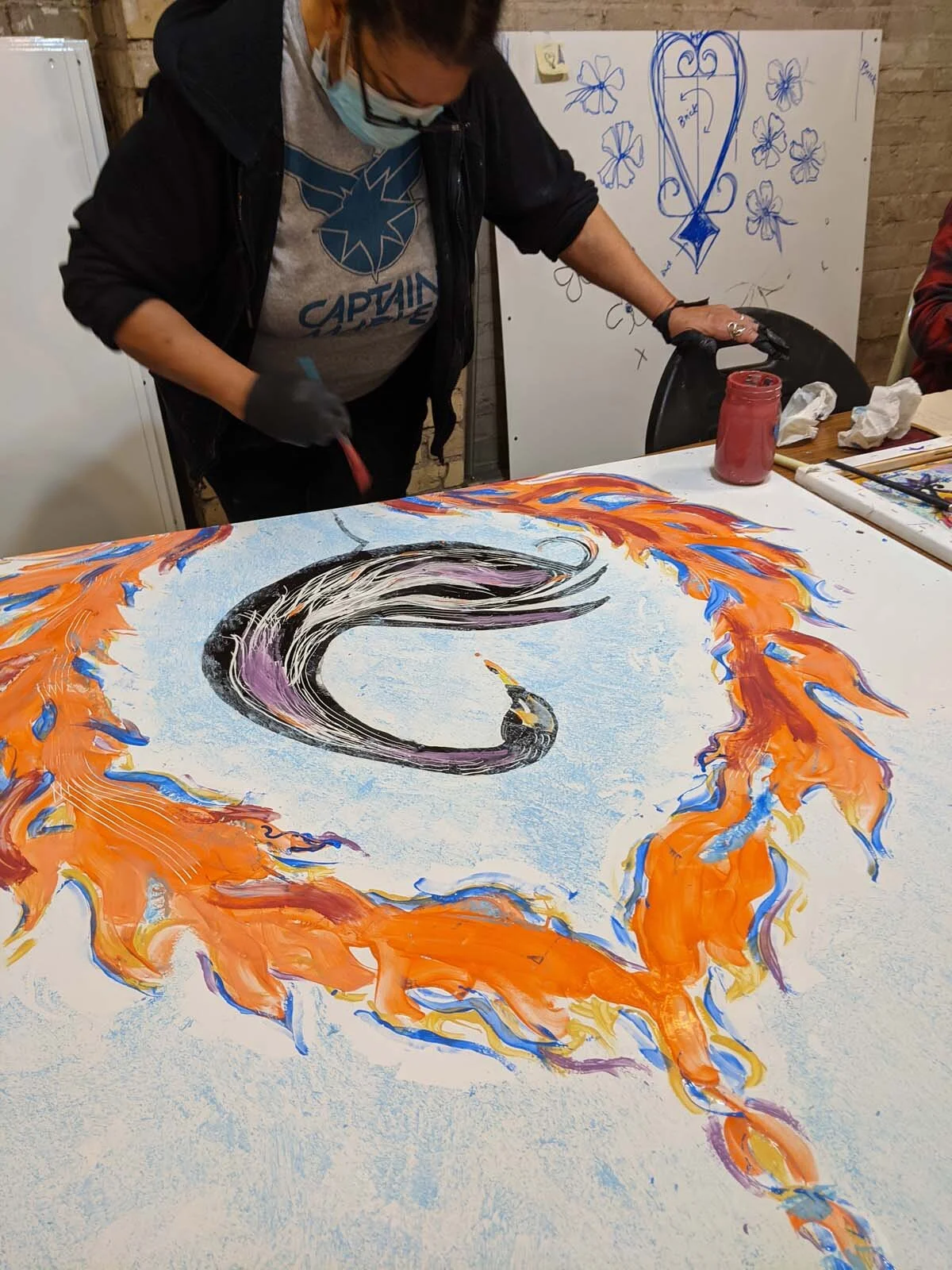
Artist Interview: Esther Osayande
Esther Osayande recently installed her public artwork, Sankofa, as part of the "Illuminating Legacies" project with Pillsbury House + Theatre. She and a cohort of three other local African American artists met together virtually throughout 2020 as they developed their individual pieces, though none of them anticipated all of the challenges the year would bring.